BLUe Series

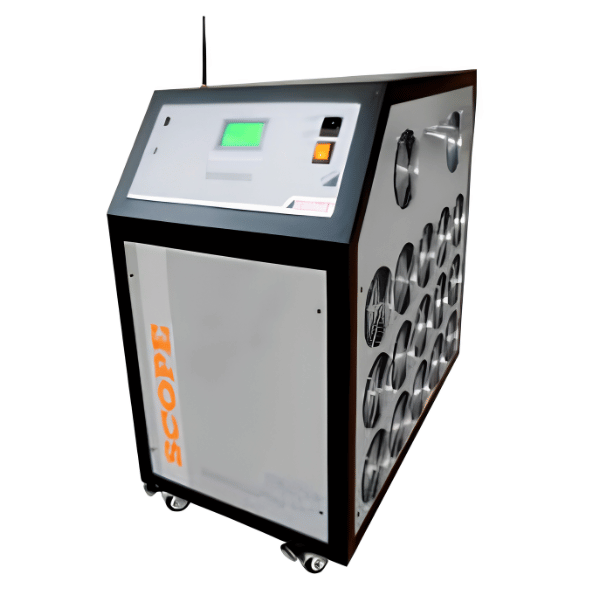
Battery Loading Unit

Battery banks have become an inseparable part of uninterrupted or back-up power supply arrangements in various industries like Power, Telecom, IT etc. In substations the critical protection, control & communication systems run on battery power. Hence the reliability of these battery banks is crucial to ensure smooth operation of equipment which they are serving. The capacity of battery may get reduced significantly before the expected life span of battery due to various reasons. The only way to assess the continual health of battery banks is periodical maintenance inspection & testing. Conducting a discharge test on batteries is most effective way to check the battery capacity. SCOPE introduces BLUe Series Battery Loading Units; these are moveble instruments for controlled & monitored discharge of batteries. They are designed for integrated site discharge test, design & QC test and also for monitoring discharge process of battery bank with connected load. Each single autonomous unit having built-in display, keypad and wireless communication with computer makes it very easy to use. It comes in different configurations ranging from 12V to 380V discharge voltages and 50A to 300A discharge currents. Various options are available to control & monitor the discharge process. With the help of optional Cell Monitoring Unit – CellMon, voltage of each individual cell can be monitored & data sent to main BLUe unit and then from main unit to computer via wireless communication. Each BLUe unit is supplied with computer downloading & analysis software for real time monitoring of discharge process.

Measurement

Easy user interface with direct display of voltage & discharge current makes discharging a very easy task. Different models cover different types of cells (1.2V, 2V, 6V and 12V) and battery banks (24V, 48V, 110V, 220V and 380V). Discharge time, Discharge capacity, cell cut-off voltage & total cut-off voltage these are the four options available in BLUe to stop/auto shutdown the discharging process.

The optional CellMon – Data Acquisition Unit monitors discharging values of each cell & could be viewed on the LCD display of the instrument or computer simultaneously by using the analyzing software. Wireless communication technology enables it to continuously monitor & display the real time discharge process of all individual cells via monitoring terminal. Thus surveillance of each cell is done as well as suspected cell can be targeted & removed.

Optional Cell Monitoring Unit – CellMon

CellMon contiously monitors voltage of each cell connected to it and wirelessly sends data to BLUe main unit. It is rugged and capable to monitor all type of batteries (1.2V, 2V, 6V and 12V). Single CELLMon can be connected with 12 cells of 1.2V, 2V or 4 cells of 6V / 12V. BLUe can record overall voltage discharge current & discharge capacity even without CELLMon

TECHNICAL DATA

Full Product Specifications


BLUe 0512/0513 0522/0523 0842 0852 1111/1112 1120A

/1120 B

1121/1122 1131
Application T T T W P T/P T/P T/P
 

Discharge Voltage : Current


48V: 200 /

300A

24V: 200 /

300A

48V: 200 /

300A

24V: 100A

36V: 150A

48V: 200A

80V: 200A

12V: 100A

24V: 200A

36V: 200A

48V: 200A

80V: 200A


110V: 100

/ 200A

12V: 50 /

50A

110V: 50 /

25A

48V: 100 /

200A

110V: 100

/

200A


12V: 100A

24V: 50A

110V: 75A

Accuracy Current : Value ± 1%; Voltage : 0.5%
Resolution Current : 0.1 A or 0.5% of range whichever is higher; Voltage : 0.1V
PMax (kW) 11 / 16.5 11 / 16.5 18.4 18.4 12.6 / 25 6.5 / 3.25 12.6 /

25

9.5

Application : P – Power Utility, T – Telecom, U – UPS, W – Wide Voltage Range
Related Products

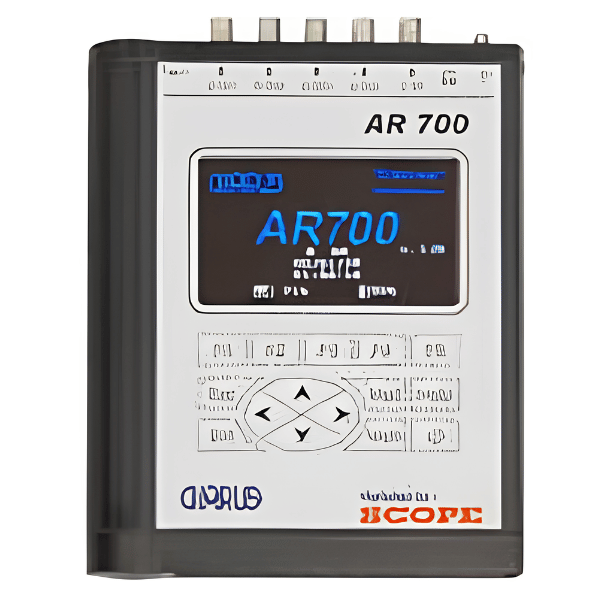
AR700

The AR700 measures acoustic signals with multiple relocatable acoustic sensors mounted on the transformer. The software determines the defect location

PD Analyser

This is an ‘All in One’ solution for detection, analysis & localisation of partial discharges in the insulation of high-voltage

CFL Series – CIS

After excavation, sometimes it is confusing to identify the right cable from bunch of similar appearance cables. Cable identification is